Walk into a pharmacy or browse online and there are dozens of acne cleansers, spot treatments, serums, patches, and exfoliating products available. For mild, occasional blemishes, simple skincare may sometimes be sufficient.
Persistent or inflammatory acne can be different.
Knowing when acne management therapy deserves consideration can help prevent prolonged experimentation, especially for teenagers and adults experiencing repeated breakouts.
For patients around Vasant Vihar, Thane, the decision should be based less on how many pimples are visible on a particular day and more on the overall acne pattern.
When Can Basic Skincare Be Reasonable?
A simple routine may be adequate when breakouts are infrequent, mild, and not leaving significant marks or scars.
Basic measures can include gentle cleansing, suitable moisturisation, avoiding unnecessary picking, and appropriate sun protection.
The problem begins when multiple acne products are added without considering how they interact. Excessive cleansing and repeated exfoliation can irritate the skin without necessarily controlling the acne.
When Does Professional Acne Management Become More Relevant?
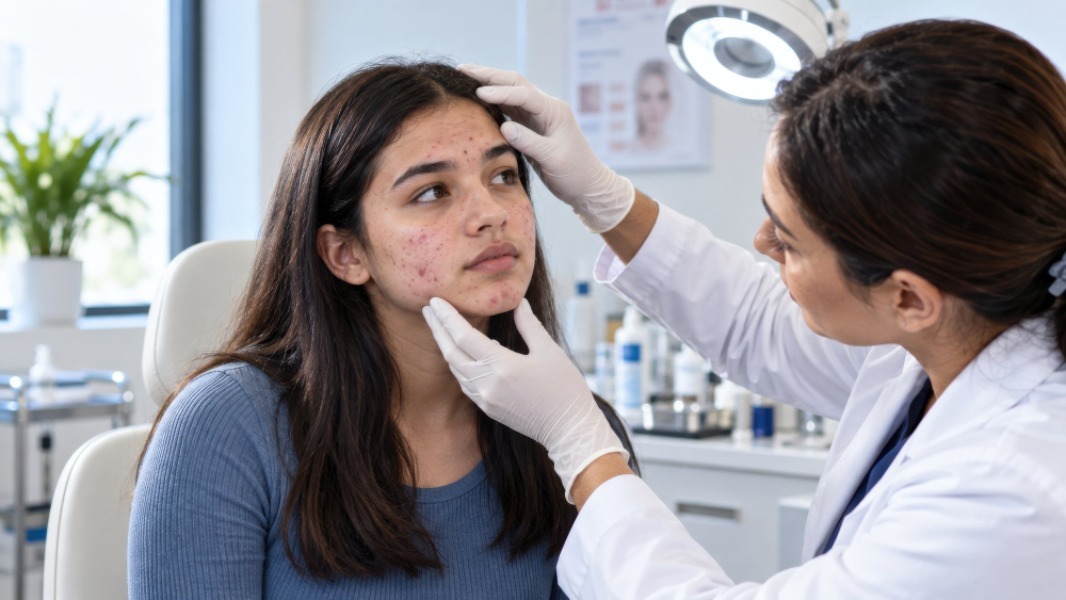
Consider clinical evaluation if you notice:
- Frequent inflammatory breakouts
- Painful or deeper lesions
- Acne affecting large areas
- Persistent breakouts despite appropriate skincare
- Increasing dark marks after acne
- Early signs of scarring
- Significant irritation from self-treatment
- Acne that suddenly changes in pattern
The presence of scarring is particularly important because treating active acne and treating established scars are separate objectives.
Teenage and Adult Acne May Need Different Context
Teenage acne is common, but that does not mean every teenager should simply wait for it to disappear.
Severity, inflammation, scarring risk, and psychological impact matter.
Adult acne can require a different evaluation. A dermatologist may consider the pattern, onset, treatment history, and relevant clinical factors rather than assuming it should be managed exactly like adolescent acne.
Why 'Strongest' Is Not the Same as 'Most Suitable'
People frustrated with breakouts often search for stronger treatments.
This can backfire.
A treatment that causes excessive dryness, burning, or peeling may become difficult to continue. Acne care generally requires consistency, so tolerability and correct use matter alongside treatment selection.
The aim is not to make the skin feel aggressively treated. It is to develop a manageable plan appropriate for the acne.
What Can an Acne Plan Include?
Depending on assessment, acne management may involve a combination of:
- A simplified home routine
- Topical treatment
- Oral medication when clinically indicated
- Advice about relevant triggers or habits
- Monitoring for pigmentation and scarring
- Procedures in selected situations
- Follow-up to assess response
Not every patient needs every component.
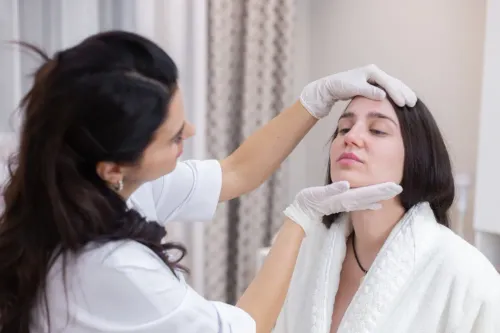
At SIYONA Skin Hair and Aesthetic Clinic, patients can have their acne pattern assessed before deciding how medical skincare or other dermatological options should be incorporated.
Do Not Ignore What Happens After the Pimple
Many patients focus entirely on active acne while accumulating post-inflammatory pigmentation or scars.
Early management should therefore consider both current breakouts and the risk of lasting changes.
For people in Vasant Vihar and surrounding parts of Thane, Maharashtra, the key question is not whether an over-the-counter product is 'good' or 'bad.' It is whether the level and pattern of acne can reasonably be managed through basic skincare or whether it now requires a more structured approach.
If breakouts are recurring, painful, leaving marks, or resisting your current routine, a dermatology assessment can help determine the next appropriate step.
Keywords