Not every pimple, dry patch, or temporary skin change requires extensive evaluation. Many minor concerns settle with basic care. The situation changes when symptoms persist, repeatedly return, spread, leave marks, or do not respond as expected.
A clinical skin assessment can help determine what type of concern is present and whether treatment is necessary.
For people in Manpada, Thane, knowing when to move beyond self-care can prevent months of trial-and-error skincare.
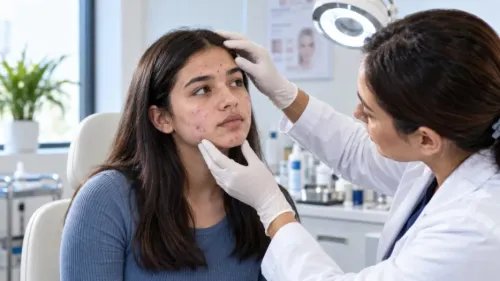
Persistent Acne Deserves Closer Attention
Occasional pimples are common. Repeated inflammatory breakouts, painful lesions, or acne that is beginning to leave scars deserve greater attention.
Assessment can examine the type and severity of acne, its distribution, existing pigmentation or scarring, and possible contributing factors.
This information helps determine whether routine skincare is enough or a medical treatment plan should be considered.
Pigmentation That Keeps Returning
Dark patches and uneven tone can arise for different reasons.
Repeatedly applying brightening products without understanding the pigmentation pattern can lead to disappointing results and, in some cases, irritation.
Clinical examination helps place the visible pigmentation in context before deciding whether skincare, medication, sun protection, procedures, or a combination should be considered.
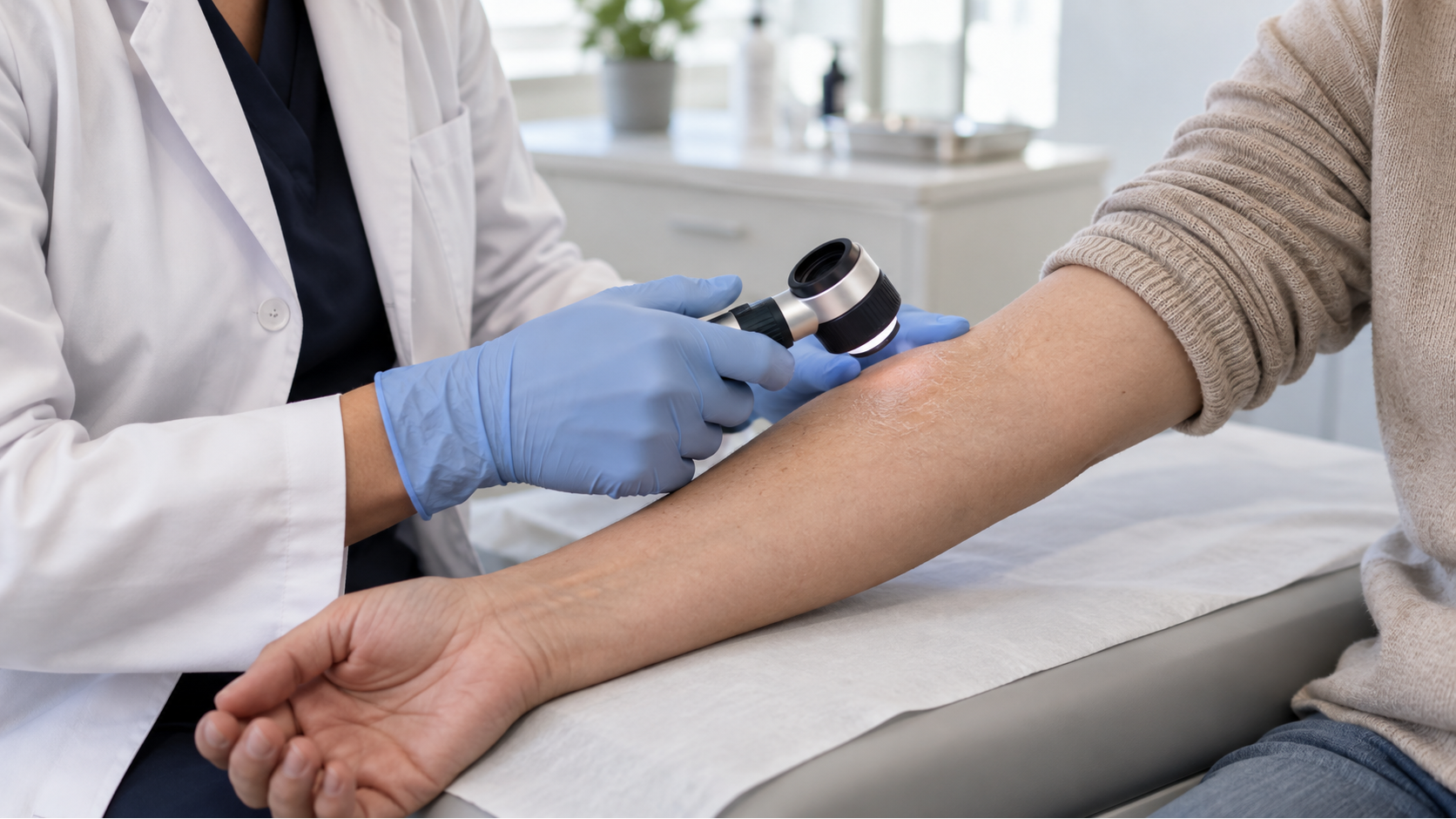
Recurring Redness, Itching, or Irritation
If the skin repeatedly becomes red, itchy, flaky, or uncomfortable, adding more cosmetic products may complicate the situation.
A dermatologist may review when the reaction occurs, which areas are affected, products being used, occupational exposure, and other relevant factors.
The goal is to understand the pattern rather than continually suppressing individual flare-ups without knowing what may be contributing to them.
Changes in Texture Can Have Several Explanations
Roughness, visible pores, acne scars, fine lines, and uneven skin texture are often grouped together online.
They are not necessarily the same problem.
The appropriate approach depends on what is creating the texture concern. Active acne, residual scars, enlarged-looking pores, dryness, and ageing-related changes may require different strategies.
What Should You Bring to an Assessment?
You can make the appointment more useful by preparing a brief history.
Bring or note:
- Current skincare products
- Previous treatments
- Known allergies
- Relevant medications
- Approximate date symptoms began
- Changes that make the problem better or worse
- Photographs of previous flare-ups, if applicable
Avoid hiding relevant information simply because a product was self-selected or purchased online. It can help the clinician understand how the skin has been managed.
Assessment Should Come Before Aggressive Treatment
People seeking aesthetic improvement sometimes arrive already convinced that they need a particular peel, laser, resurfacing procedure, or injectable treatment.
A clinical assessment may confirm that the requested option is suitable, suggest an alternative, or identify a reason to postpone it.
That is an important part of responsible aesthetic care.
Patients visiting SIYONA Skin Hair and Aesthetic Clinic can discuss persistent skin concerns with attention to both dermatological assessment and appropriate aesthetic options where relevant.
For residents of Manpada and other parts of Thane, Maharashtra, the practical threshold for seeking assessment is straightforward: if a skin concern is persistent, worsening, recurrent, uncomfortable, or beginning to affect appearance through scars or pigmentation, understanding the problem is usually more useful than continuing to change products blindly.
Keywords