The amount you pay depends less on the label “skin growth” than on the diagnosis, number and size of lesions, removal method, and whether examination or histopathology is needed. You will be able to compare realistic price ranges, identify hidden charges, and ask whether a proposed treatment is medically appropriate before booking.
Key takeaways
- Budget ₹500–₹1,500 for the initial dermatology consultation.
- Ask whether the quoted price includes anaesthesia, dressing, medicines and follow-up.
- Confirm the diagnosis before removing any wart, mole or skin tag.
- Ask whether the removed tissue will be sent for histopathology.
What removal costs in Thane usually include
Budget approximately ₹500–₹1,500 for a dermatology consultation before paying for removal. Planning ranges for wart mole and skin tag removal in thane are ₹500–₹2,000 per wart-treatment session, ₹1,000–₹3,000 for a small skin tag, and ₹3,000–₹10,000 or more for mole removal.
- Wart treatment: ₹500–₹2,000 per session. Cryotherapy priced at the lower end can cost more overall when treatment repeats every 2–4 weeks.
- Small skin tag: ₹1,000–₹3,000. A clinic may charge per lesion, by size, body area, or for a group of lesions.
- Mole removal: ₹3,000–₹10,000 or more. Anaesthesia, suturing, pathology and follow-up can increase the final bill.
- Multiple, broad-based or plantar lesions: request a separate estimate because they take more treatment time and may need several sessions.
These figures are planning ranges, not an official local tariff. For an accurate skin growth removal cost in Thane, ask what the quote includes and whether it covers examination, local anaesthetic, sterile instruments, dressing, medicines, histopathology and follow-up. Lesion size, location and count all alter the total.
A low headline price may apply only to one tiny, uncomplicated lesion, not the complete course of care.
How to compare the consultation fee with the final bill
A quotation is incomplete if it shows only the removal charge. Separate the consultation, dermoscopic or clinical examination, and procedure fee, then ask for the final amount after every extra is included.
| Quote item | Ask whether it includes | Why it affects the bill |
|---|---|---|
| Consultation and examination | Doctor review, dermoscopy, or clinical examination | Diagnosis may change the procedure |
| Procedure | Local anaesthetic and sterile instruments | Numbing and safe preparation are separate charges at some clinics |
| Aftercare | Dressing, dressing changes, medicines and follow-up review | Wound care can continue after removal |
| Laboratory work | Histopathology or other laboratory charges | A specimen may need examination by a pathologist |
| Repeat treatment | Another wart session or repeat procedure | Cryotherapy may require more than one visit |
Ask whether the price is per lesion, per visit, by size, or for a group. Ask whether a second wart session is charged again, whether pathology is optional or clinically advised, and whether review is included. Compare identical inclusions when checking skin tag removal in Thane or searching skin growth removal cost in Thane.
Surgical mole removal can cost more than superficial skin-tag treatment because the bill may include local anaesthetic, sutures, dressing, review and a pathology report. Before booking, disclose diabetes, immune suppression, blood thinners, pregnancy, local-anaesthetic allergy, and any history of keloids or hypertrophic scars; these details can change planning and cost.
Why diagnosis comes before cosmetic removal
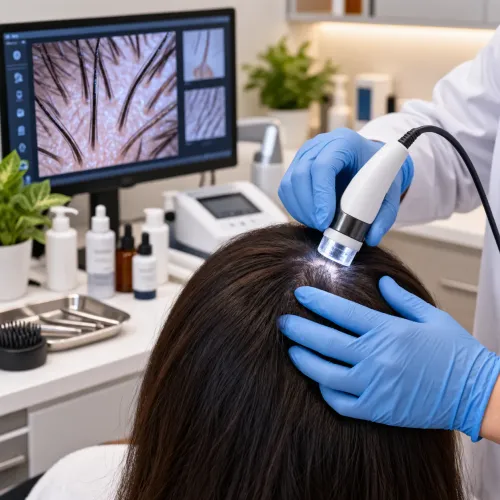
A dermatologist identifies the growth before choosing a removal method. Examination and dermoscopy assess pigment pattern, surface, borders, symmetry, attachment and depth; the same bump can require completely different treatment.
| Lesion | Clues assessed | Why it changes treatment |
|---|---|---|
| Wart | Rough surface, interrupted skin lines, viral pattern | Often treated with cryotherapy or another wart-specific method |
| Melanocytic mole | Pigment pattern, symmetry and border | A changing mole may need tissue preservation and histopathology |
| Skin tag | Soft, flesh-coloured, narrow attachment | Removal can be simple when the diagnosis is clear |
| Seborrhoeic keratosis | Waxy, stuck-on surface | Treatment differs from wart destruction |
| Cyst | Deeper lump, capsule, possible pore or discharge | Surface removal may leave the cyst wall behind |
| Another lesion | Unusual depth, colour, ulceration or bleeding | Needs dermatologist-led assessment before removal |
Arrange assessment before cosmetic removal if you notice:
- Recent growth or rapid change
- Asymmetry, an irregular border or multiple colours
- Bleeding, ulceration, persistent itching or pain
- A non-healing surface
Do not shave, burn, tie off, cut or apply acids to a suspected mole. Injury can scar the area, cause infection and remove evidence needed for diagnosis. Take extra care with pigmented or bleeding lesions and growths on the face, eyelid, genitals or around a nail.
A search for “wart removal dermatologist in Thane” should lead to diagnostic examination, not an assumption that every bump is a wart.
Which removal method fits which lesion—and when pathology matters
Cryotherapy is a practical first option for many warts, but it often needs repeat sessions 2–4 weeks apart. The best method depends on the lesion’s diagnosis, depth, location and appearance.
| Option | Practical benefit | Main trade-off |
|---|---|---|
| Cryotherapy | Freezes many warts without cutting | Pain, blistering, pigment change and incomplete clearance |
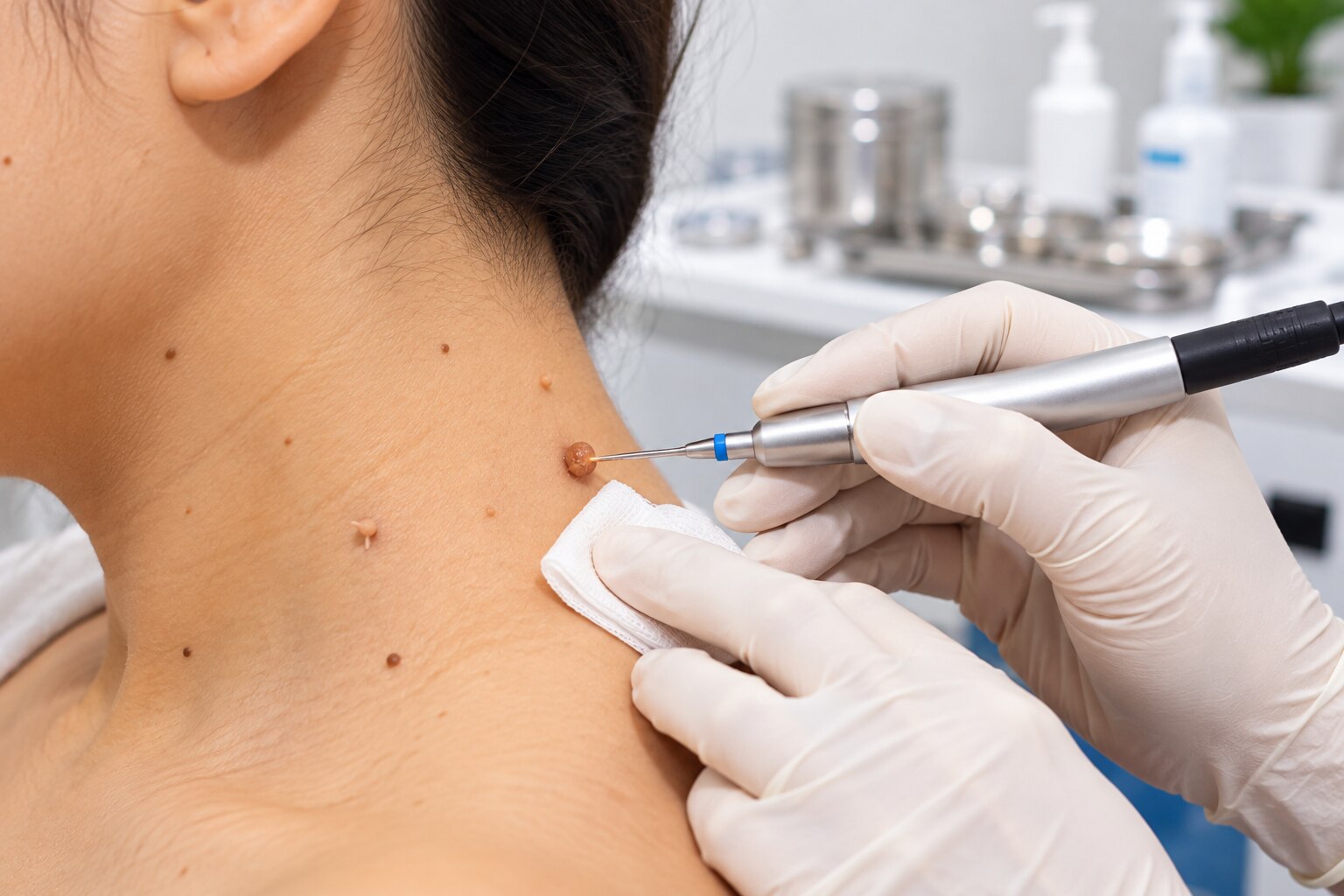
| Electrocautery | Rapidly removes small skin tags and selected superficial lesions | Burn-like wound, redness, hyperpigmentation or a small scar |
| Radiofrequency ablation | Precise, quick treatment for selected small tags or superficial growths | Similar wound-care and pigment risks |
| Shave removal | Suits selected raised, protruding lesions | Recurrence or incomplete removal; suitability depends on depth and diagnosis |
| Surgical excision | Removes the lesion with tissue available for microscopy | Sutures, wound care, a scar and more downtime |
| Laser treatment | Can treat selected superficial lesions | Destroyed surface tissue may prevent later microscopic examination |
| Chemical treatment | Clinician-selected chemicals can treat some warts | Irritation, burns and poor control around normal skin |
Over-the-counter acids are inappropriate for uncertain, facial, genital, eyelid, pigmented or bleeding lesions. They can burn skin, cause infection and destroy evidence needed for diagnosis.
Not every clinically typical benign lesion requires histopathology. A changing, asymmetric, irregularly pigmented, bleeding, itchy or rapidly enlarging mole needs dermatologist guidance; complete excision with pathology is generally more informative than laser or cautery. At a mole removal clinic in Thane, ask whether tissue will go to a pathologist and which procedure is proposed.
The phrase wart mole and skin tag removal in Thane covers different diagnoses, not one standard treatment.
Questions to ask before treatment and how to protect the result
Before booking skin tag removal in Thane, ask who will examine the lesion, what diagnosis is being treated, and why that method fits it. Ask whether tissue will be preserved for histopathology, and request a complete written estimate covering examination, anaesthetic, procedure, dressing, medicines, pathology and follow-up.
A mole removal clinic in Thane should also state the likely number of sessions, downtime, scarring and pigment-change risk, and what happens if the lesion returns.
| Question | Why it matters |
|---|---|
| Diagnosis and examiner | Confirms whether it is a wart, mole, skin tag or another growth |
| Method and tissue handling | Shows whether removal preserves a specimen for pathology |
| Total estimate and session count | Prevents a low headline fee from hiding repeat-treatment costs |
| Recurrence plan | Explains review or re-treatment if tissue remains |
Keep the dressing clean and follow the clinic’s instructions about changing it, washing the area and applying medicines. Protect treated skin from ultraviolet exposure with clothing or broad-spectrum sunscreen after the wound permits it; sunlight can deepen post-procedure pigmentation.
Seek urgent medical advice for spreading redness, increasing pain, pus, fever or uncontrolled bleeding. Skin tags can return when tissue remains, and new tags can develop elsewhere. Friction, pregnancy, obesity and insulin resistance contribute to new tags, so removal does not correct those factors.
SIYONA SKIN HAIR & AESTHETIC CLINIC can provide Thane patients with lesion assessment, a method-specific estimate and follow-up instructions rather than a decision based only on the lowest skin growth removal cost in Thane.
Related service
Skin Care Wart, mole, and skin tag removal Treatment Safe and Effective Removal for Clearer, Healthier Skin Warts, moles, and skin tags are common skin growths that can affect your appearance,... View service → |
Frequently asked questions
What does wart, mole and skin tag removal cost in Thane?
Planning ranges are ₹500–₹2,000 per wart-treatment session, ₹1,000–₹3,000 for a small skin tag, and ₹3,000–₹10,000 or more for mole removal. The final bill depends on lesion size, number, method, anaesthesia, pathology and follow-up care.
Does the consultation fee come off the final removal bill?
Not always. Ask whether the ₹500–₹1,500 consultation fee is separate, adjusted against treatment, or charged again for follow-up. Request an itemised estimate before booking removal.
Why must a dermatologist diagnose a skin growth before removal?
A wart, mole and skin tag need different treatment decisions. A changing, bleeding, painful or irregular lesion requires medical assessment before cosmetic removal because it may need biopsy or histopathology.
Which removal method is used for warts, moles and skin tags?
Cryotherapy or chemical treatment is used for some warts, while skin tags are commonly removed by snip excision, electrocautery or another minor procedure. Moles may require shave or surgical excision, with the choice based on depth, location and appearance.
What should I ask a mole removal clinic in Thane before treatment?
Ask for the diagnosis, proposed method, total price, anaesthesia and dressing charges, expected healing time, scar risk, follow-up plan, recurrence risk and whether tissue will be examined by histopathology.
Keywords