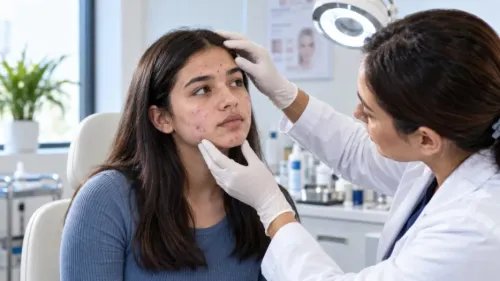
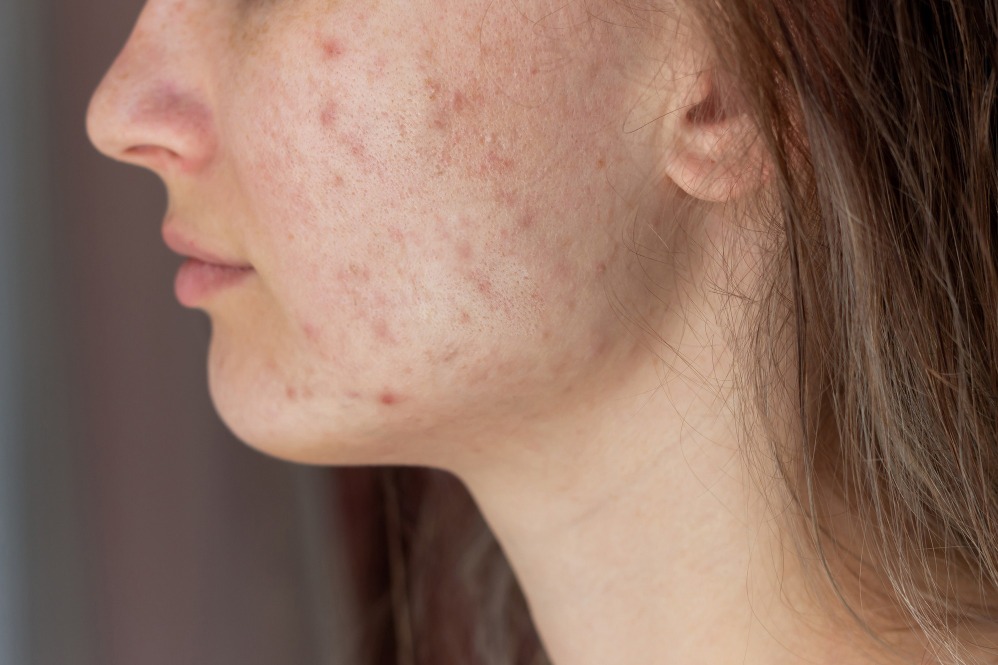
Clearing active acne does not always mean the skin immediately returns to its previous appearance. Many people continue to notice dark marks, red areas, uneven texture, or scars long after individual pimples have settled.
Effective post-acne skin care begins by identifying which of these changes are actually present.
For patients around Pokhran Road, Thane, this distinction matters because acne marks and acne scars are not interchangeable terms, and they may respond to different approaches.
Is It a Mark or a Scar?
Post-acne discoloration may appear as brown, greyish, red, or pink areas depending on the skin and the type of inflammation that occurred.
A scar, by contrast, involves a structural change in the skin.
Some scars appear depressed or indented, while others can become raised. This is one reason a cream marketed for 'acne marks' should not automatically be expected to correct established textural scarring.
Control Active Acne First
One of the most common mistakes is focusing heavily on scars while new acne continues to develop.
If fresh inflammatory lesions are repeatedly forming, they can create additional pigmentation and potentially new scars.
For many patients, controlling active acne therefore remains the first priority. Once breakouts are adequately managed, residual concerns can be assessed more clearly.
Daily Skincare Still Matters
Post-acne care does not begin and end with procedures.
A suitable routine may help support the skin and prevent unnecessary irritation. Depending on individual requirements, this can involve gentle cleansing, moisturisation, targeted products, and consistent sun protection.
Sun exposure can make some forms of post-inflammatory pigmentation appear more persistent or noticeable, making photoprotection an important part of many treatment plans.
Where Do Procedures Fit?
Procedures may be discussed when textural changes or persistent pigmentation remain after appropriate assessment.
The choice depends on several factors, including:
- Type of scar or mark
- Depth and distribution
- Current acne activity
- Skin characteristics
- Previous treatment
- Tendency toward pigmentation
- Expected downtime
- Overall treatment goals
Different scar patterns may even coexist in the same person, which is why one procedure is not necessarily the answer to every acne scar.
Be Cautious with Aggressive DIY Treatment
People who are eager to fade acne marks sometimes combine multiple exfoliating acids, retinoids, scrubs, brightening serums, and spot treatments.
More aggressive treatment can increase irritation, which may complicate pigmentation in some skin types.
A structured routine is usually easier to evaluate because changes can be introduced deliberately rather than simultaneously.
Set Expectations Around Gradual Improvement
Post-acne changes often require patience.
Pigmentation may gradually improve, while established scars can require different treatment strategies and sometimes multiple sessions when procedures are appropriate. Complete removal should not be assumed.
At SIYONA Skin Hair and Aesthetic Clinic, assessment can help distinguish ongoing acne, residual discoloration, and structural acne scarring before an appropriate plan is discussed.
For patients in Pokhran Road and elsewhere in Thane, Maharashtra, this distinction can prevent spending months treating the wrong problem.
The practical sequence is simple: establish whether active acne is controlled, identify whether the remaining concern is pigmentation or scarring, protect the skin from avoidable irritation, and then choose treatment according to the actual finding.
Post-acne care works best when it is treated as a separate stage of acne management rather than an afterthought.
Keywords