An exosome facial is not one standardized procedure: the device, delivery method, product source and patient’s medical history determine what happens and how long recovery lasts. By the end, you will know what to ask before treatment, what sensations and skin changes to expect, and which claims deserve caution.
Key takeaways
- Confirm the product, source, delivery method and treatment goal before booking.
- Ask how autologous material is collected, processed and documented.
- Compare exosome therapy with established procedures for your specific skin concern.
- Plan recovery around the device used, not the exosome label.
The consultation determines whether exosomes are appropriate
A clinician should recommend exosome therapy for skin only after checking your skin, medical history, treatment goal, and the exact product and delivery method proposed. The examination should identify whether your concern suits an emerging treatment or a better-established option.
1. State your goal, such as fine lines, texture, acne scarring or pigmentation, and ask what improvement is realistic. Promises to erase wrinkles permanently, tighten lax skin, or provide stem-cell-like regeneration exceed established evidence.
2. Expect assessment of skin type, active acne, infection, eczema, dermatitis, open wounds, and a tendency toward keloids or prolonged darkening after injury.
3. Report cold sores, allergies, immune suppression, bleeding disorders, and every medicine, especially anticoagulants and current or recent isotretinoin. These details affect safety and healing.
4. Ask whether the preparation is applied topically after microneedling, fractional laser or radiofrequency microneedling, or injected into the skin. The device often determines redness and downtime.
5. Confirm whether the material comes from donated or laboratory-sourced cells, how it is handled, and whether it has regulatory authorization where you live. In the United States, no exosome product has FDA approval for cosmetic skin rejuvenation.
6. Get the planned number of sessions, alternatives, uncertain evidence, expected costs, and a clear plan for managing infection, burns, pigment change, or other complications.
A cautious clinician may recommend sunscreen, retinoids, treatment of underlying disease, laser resurfacing, or surgery instead.
The treatment sequence depends on the delivery method
The answer to what happens during exosome treatment for skin depends on how the product enters the skin. A topical serum on intact skin feels like a cool, wet layer; microneedling or laser makes the delivery more invasive and determines most of the discomfort.
1. The clinician photographs and cleanses your face, then removes makeup, oil and sunscreen. An antiseptic follows. If microneedling or laser is planned, numbing cream may sit on the skin before removal; this creates pressure and prickling rather than sharp pain.
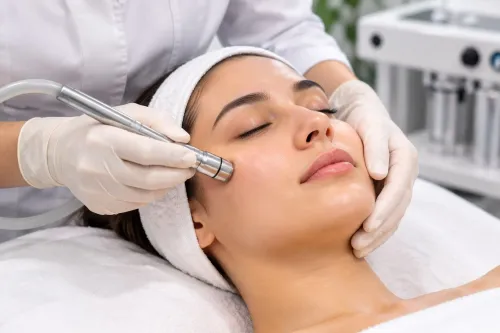
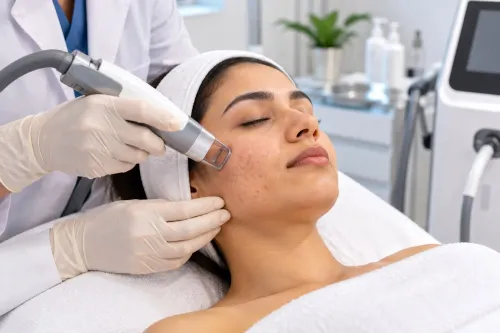
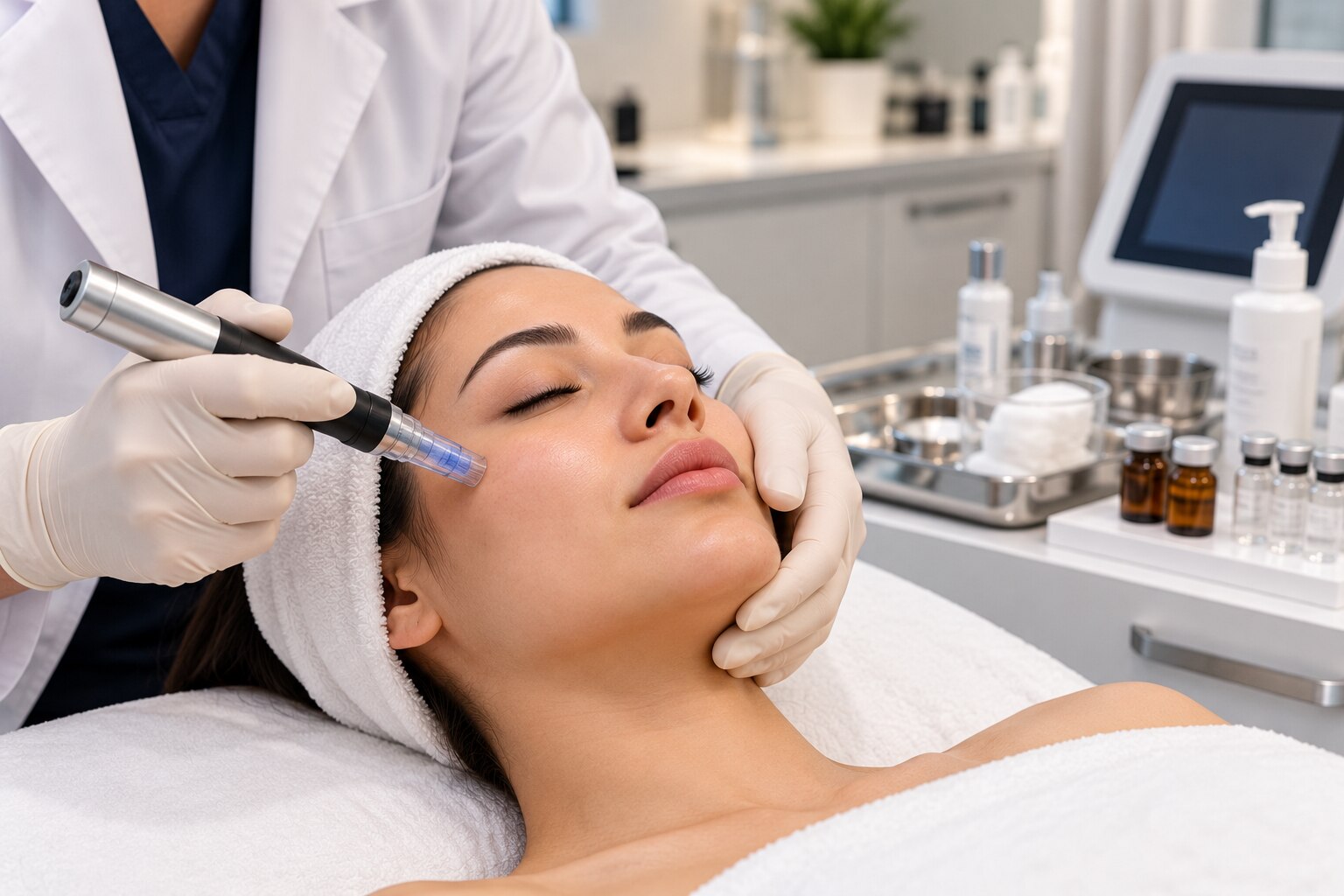
2. The delivery device comes next. Microneedling produces repeated tapping or scratching as fine needles create controlled channels. Fractional laser feels like hot pinpricks or a snapping rubber band. The clinician applies the exosome preparation after the device when the protocol uses it as a post-procedure topical, allowing contact with the treated surface.
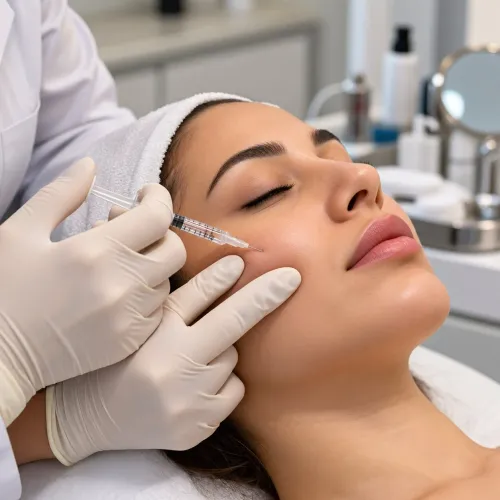
3. An injection-based protocol uses a fine needle at multiple points instead. Expect brief pinches, pressure and small raised spots; topical anaesthetic can reduce the sting. A simple surface application has no needle sensation, but it also does not deliver the product through microchannels.
Redness, warmth and tightness can follow the device, especially after microneedling or laser. Ask which delivery method is planned, whether the product is applied before or after it, and how long the numbing cream remains on your skin. The treatment sequence should be explained before you consent.
Autologous treatment requires more than drawing blood
A blood draw does not produce a ready-to-use exosome product. In a genuinely autologous exosome skin treatment, the clinic must identify exactly what it collects from you—such as blood, tissue, or a patient-derived cell sample—and explain how vesicles are obtained from that material.
The processing should include more than spinning a tube in a centrifuge. Ask whether the laboratory performs:
- Cell or vesicle isolation from your sample
- Purification and concentration
- Identity testing to confirm the material contains the claimed extracellular vesicles
- Sterility and contamination testing
- Potency or activity testing
- Controlled storage, labelling and traceability back to your sample
There is no universal cosmetic dose or processing protocol for exosomes. A product made from donated placental, umbilical or other human tissue is allogeneic, not autologous; laboratory-derived material from another source is not autologous either. A clinic should also explain its manufacturing facility, regulatory pathway and why the preparation is suitable for facial use.
That timeline usually rules out treatment on the same visit. A clinic might collect your sample first and schedule delivery after processing and quality checks. If treatment happens immediately after a blood draw, ask what is being applied: blood-derived plasma or another preparation is not automatically an autologous exosome product.
At SIYONA SKIN HAIR & AESTHETIC CLINIC, ask this distinction before consenting to an “autologous” protocol.
Related services
Skin Care Exosome Therapy for Skin Rejuvenation Advanced Cellular Renewal for Healthier, Younger-Looking Skin Exosome Therapy is one of the latest innovations... View service → |
Skin And Hair autologous exosome with meta cell technology View service → |
Compare the treatment with familiar skin procedures before judging its benefits
A smoother photograph does not prove that exosomes caused the change. An “exosome facial” is not standardized: clinics may apply a preparation after microneedling, fractional laser or radiofrequency microneedling, while others inject it.
| Procedure | Main action | What evidence supports |
|---|---|---|
| Exosome facial | Applies extracellular vesicles, often after a device-created injury | Early laboratory, animal and small human studies; combination results cannot separate exosomes from the device or wound healing |
| Platelet-rich plasma | Uses your concentrated platelets and their growth factors | Human studies support selected uses, but preparation methods and results vary; it is not equivalent to exosomes |
| Mesotherapy | Injects small amounts of a chosen cocktail into the skin | Evidence depends on the ingredients and indication; “mesotherapy” alone predicts no specific result |
| Microneedling | Creates controlled punctures that stimulate repair | Clinical support exists for selected acne scars, texture and fine lines; it may be the main active treatment in a combination |
| Hydrafacial | Cleanses, exfoliates, extracts and applies topical products | Surface smoothness and hydration, usually with limited durability; it does not remodel skin like needling or laser |
| Conventional facial | Provides cleansing, massage, exfoliation and moisturization | Short-term comfort, hydration and surface improvement rather than evidence of exosome-like regeneration |
Claims about exosome facial benefits therefore exceed the evidence when they promise superiority, permanent rejuvenation or a standard dose. A split-face study found better photoaging improvement when exosomes accompanied fractional carbon-dioxide laser, but it tested an adjunct, not exosomes alone. Ask for the product source, processing, sterility testing and storage record before comparing results.
Recovery follows the device more than the exosome label
Redness, warmth, tightness, swelling, dryness, peeling, pinpoint bleeding or crusting come from the delivery device, so the exosome treatment recovery period depends on what touched the skin. Improvement is rarely immediate: texture or tone may start looking better after several weeks, while collagen-related changes are assessed over roughly 4 to 12 weeks.
Evidence remains early, so do not assume every change came from the exosome preparation.
| Device | Common early effects | Recovery pattern |
|---|---|---|
| Microneedling | Redness, warmth, tightness, pinpoint bleeding | Often settles over several days; peeling can follow |
| Fractional laser | Redness, swelling, dryness, peeling or crusting | Recovery varies sharply with settings and skin type |
| Radiofrequency microneedling | Redness, swelling and tenderness | Visible irritation can last several days |
| Intradermal injection | Puncture marks, bruising, swelling or tenderness | Local swelling and bruising may outlast surface redness |
Follow the treating clinician’s written instructions. Use gentle cleansing, bland moisturiser and strict broad-spectrum sunscreen; avoid retinoids, exfoliating acids, scrubs, fragranced products, heat and picking until the skin barrier has recovered. Ask for the exact restart date, because laser settings, needle depth and your skin type change the timetable.
Contact the treating clinician promptly, or seek urgent medical assessment, for:
- Rapidly worsening pain, spreading redness or warmth, pus, fever or marked swelling
- Blisters, dusky or unusually pale skin, eye pain or vision changes
- Breathing difficulty or a rash spreading quickly
Frequently asked questions
What happens during exosome treatment for skin?
The process starts with a consultation covering your skin, medical history and treatment goal. The clinician then confirms the product and delivery method before performing the procedure and giving recovery instructions.
How does the delivery method change an exosome facial?
The delivery method determines the treatment sequence, the equipment used and much of the recovery period. Ask whether the product will be applied to the surface or delivered through a procedure such as microneedling.
What is involved in autologous exosome skin treatment?
Autologous treatment involves more than drawing blood. Ask how the sample will be collected, processed, identified and prepared before it is used on your skin.
What should you expect during exosome treatment recovery?
Recovery follows the device and technique used more than the exosome label. Your clinician should explain expected redness, sensitivity, aftercare and when to resume normal skincare.
Keywords