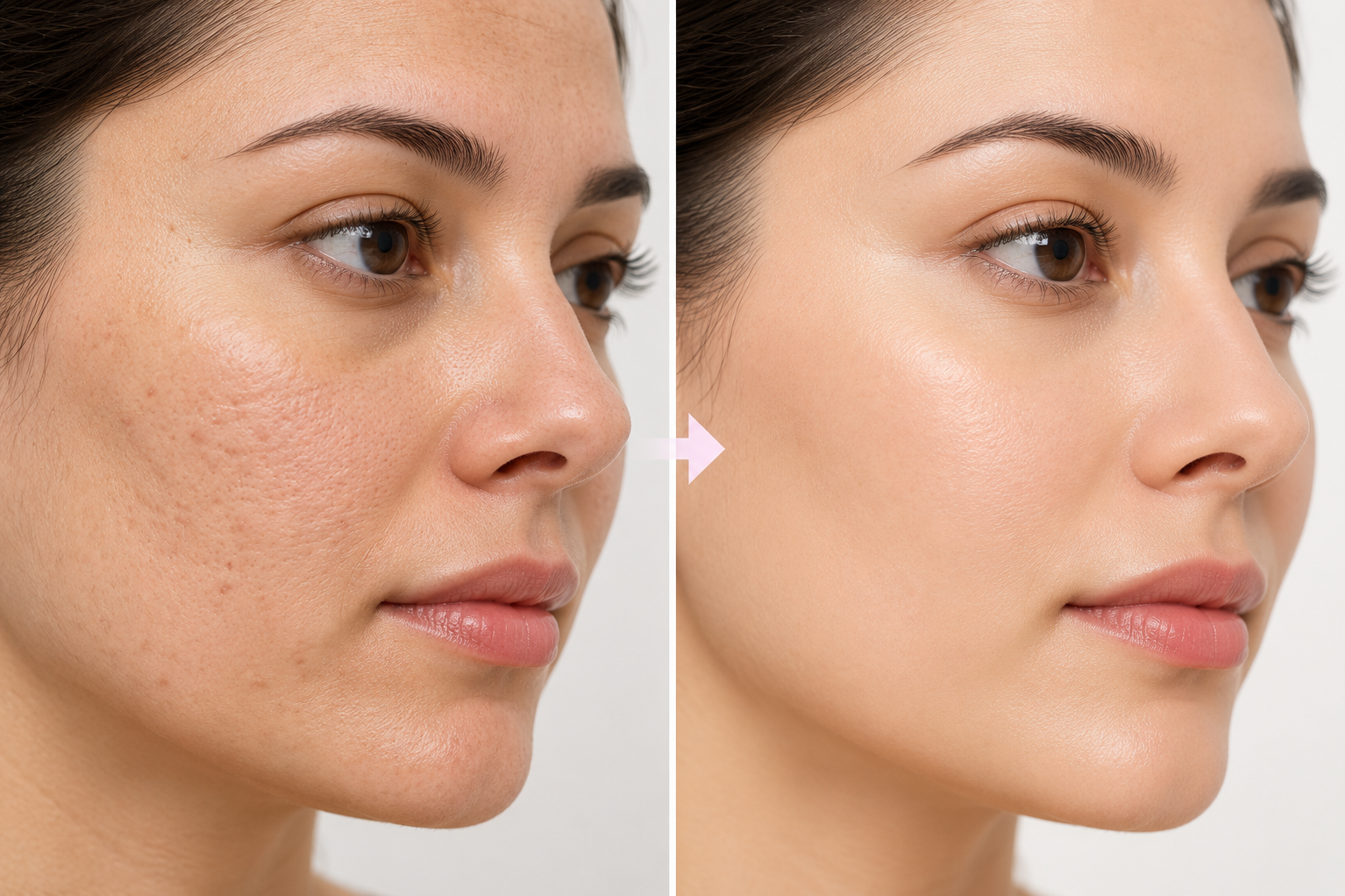
'Uneven skin texture' can describe several completely different concerns. One person may mean tiny bumps and congestion. Another may be referring to acne scars, enlarged-looking pores, roughness, fine lines, or dry skin.
That makes selecting a skin texture improvement treatment more complicated than simply choosing a resurfacing procedure.
For residents around Majiwada, Thane, the first useful step is identifying what is actually creating the uneven appearance.
If the Problem Is Dryness or Surface Roughness
Dry or irritated skin can look rough even when there is no structural scarring.
In such cases, aggressively exfoliating the skin may worsen discomfort. Reviewing cleansing habits, moisturisation, active ingredients, and the skin barrier can be more relevant than immediately considering a procedure.
This is a good example of why diagnosis changes treatment.
If the Concern Is Comedonal Acne
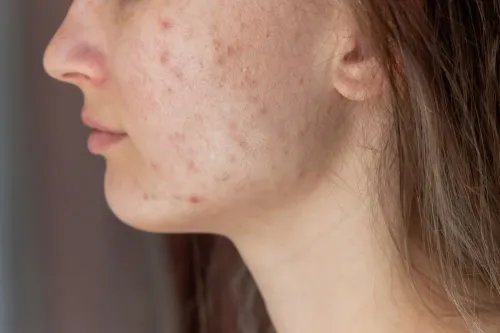
Closed comedones and other forms of congestion can create a bumpy appearance.
If active acne is responsible for the texture, controlling it may need to happen before focusing on cosmetic resurfacing.
Simply polishing or exfoliating the surface without addressing acne can produce limited benefit.
If Acne Scars Are Responsible
Indented acne scars represent structural changes and need a different evaluation.
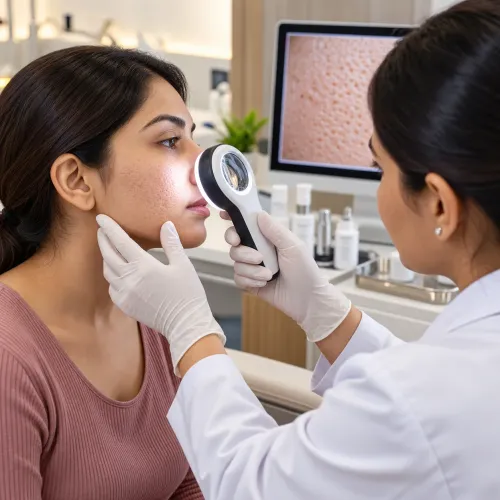
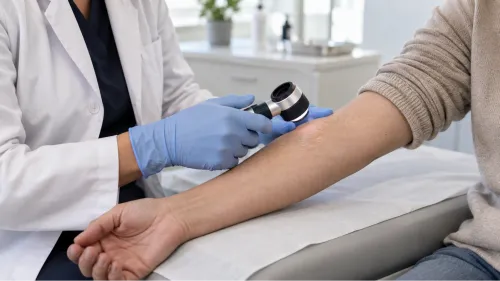
The dermatologist may examine scar type, depth, distribution, current acne activity, pigmentation risk, and previous procedures.
Different scars can respond differently to available treatment methods, and combination treatment may sometimes be discussed. No single 'scar treatment' should automatically be assumed to suit everyone.
If Fine Lines Are Changing the Surface
Age-related changes can also affect how smooth the skin looks.
Here, treatment planning may involve daily photoprotection, skincare, and appropriate aesthetic options based on the degree and location of the concern.
Again, the approach differs from treating active acne or scars.
What Should You Compare Before Choosing Treatment?
When evaluating your options, ask:
- What is causing the uneven texture?
- Is there active skin disease that needs treatment first?
- Is the proposed procedure appropriate for my skin?
- How much downtime is expected?
- What risks or temporary effects should I know about?
- Will several sessions be needed?
- What improvement is realistically expected?
These questions shift the conversation from 'Which procedure is strongest?' to 'Which approach makes sense for this particular concern?'
Avoid Treating Pores, Scars and Texture as the Same Thing
Online content often bundles these concerns together because they can coexist.
Clinically, they should still be assessed individually.
A person may have active acne, post-acne pigmentation, visible pores, and indented scars simultaneously. Trying to address everything with one aggressive treatment may not be the most appropriate sequence.
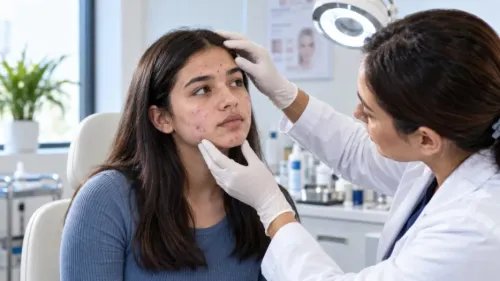
Patients visiting SIYONA Skin Hair and Aesthetic Clinic can have texture concerns examined before deciding whether skincare, medical management, aesthetic procedures, or a staged combination should be considered.
For people in Thane and the wider Thane region of Maharashtra, this assessment-first approach can also make treatment planning more practical.
Skin texture improvement is not one procedure with one predictable outcome. It is a goal. The right path depends on identifying whether the underlying issue is surface dryness, congestion, scarring, ageing-related change, or a combination of factors and then treating those factors in an appropriate order.
Keywords